
AMD Is Just… Absent: Does Absence Make the Heart Grow Fonder?
Where Is AMD in Google’s New Laptop Strategy?
Google built its new laptop platform around Intel and ARM, gave Intel three of five launch machines, named MediaTek as a partner—and left AMD completely out. As Googlebook reaches customers with some Intel-specific Android optimization still unfinished, that absence is getting harder to ignore.
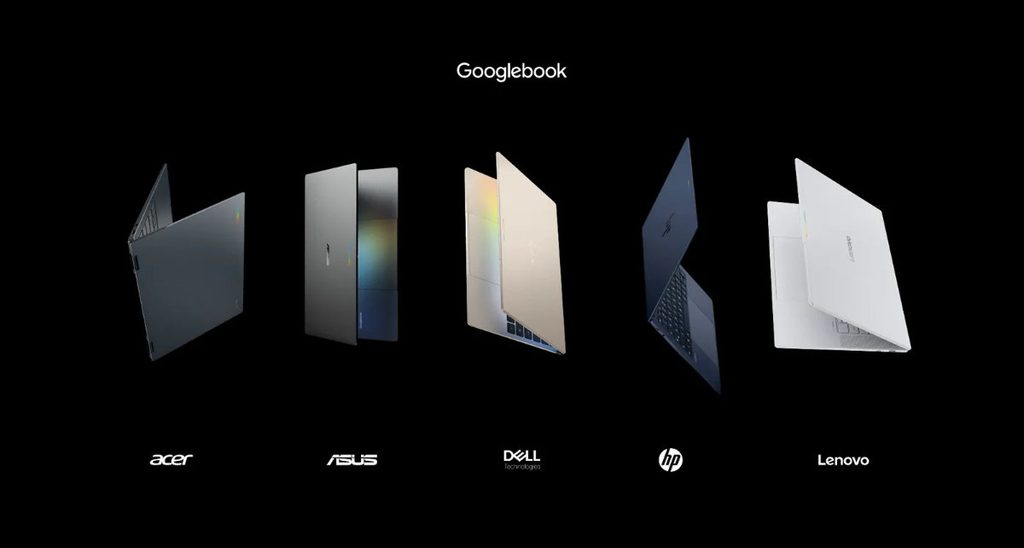
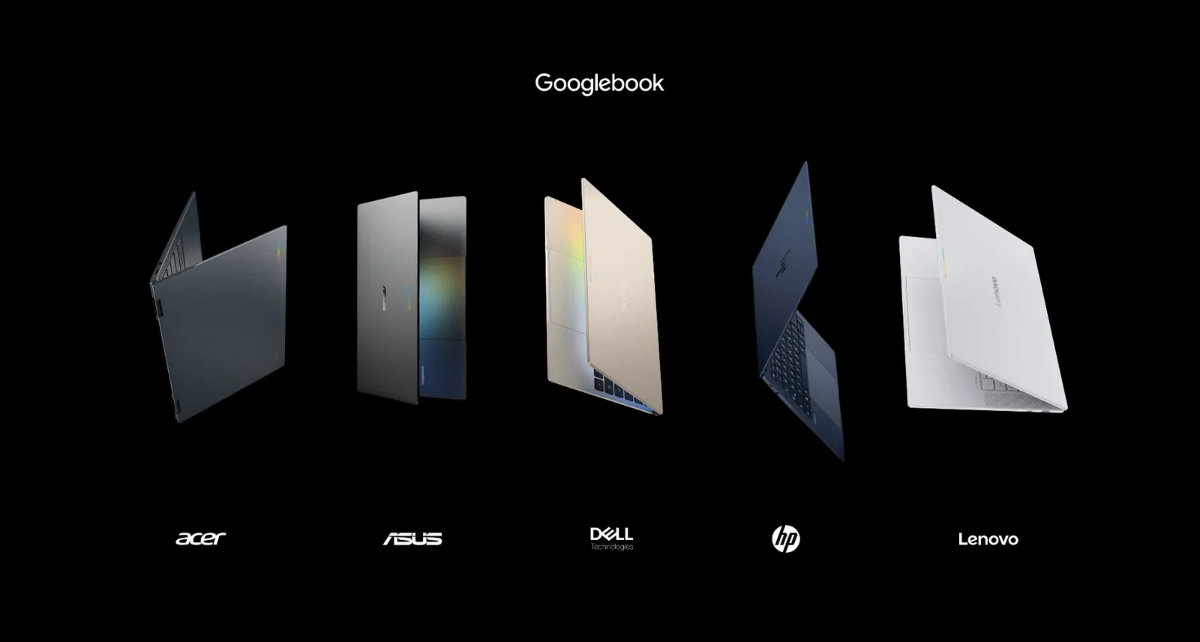
Google has five Googlebooks at launch. Three are Intel. Two are Qualcomm. MediaTek is officially part of the Googlebook silicon partnership. Google says the five launch models come from Acer, ASUS, Dell, HP and Lenovo; Intel confirms that Acer, ASUS and Lenovo use Core Ultra Series 3, while Qualcomm confirms Snapdragon X Elite powers the Dell and HP designs.
And AMD?
AMD is just… absent.
That would be easier to shrug off if AMD were a minor laptop chipmaker, lacked modern AI hardware, or had never worked with Google before. None of those things are true. AMD has spent years competing directly with Intel in premium laptops. Ryzen has already powered Chromebooks. Google has worked with AMD. Acer, ASUS, HP and Lenovo have all sold AMD-powered Chromebook hardware. In 2020, AMD said its Ryzen and Athlon Chromebook processors were designed in collaboration with Google, with all four of those OEMs preparing systems. Google publicly described AMD as a partner.
Yet Google launches its new premium computing platform and one of the world’s two major x86 processor companies simply disappears from the picture. No AMD Googlebook. No announced AMD Googlebook silicon partnership. No public explanation for why.
AMD is conspicuously missing, yet almost nobody involved seems eager to talk about why.
And the closer you look at Google’s processor choices, the stranger that absence gets.
Sources:Google · Intel · Qualcomm · AMD
So Why Was Intel the Major Choice — With Three Launch Models?
Intel didn’t just make the Googlebook launch. Intel dominated it.
Acer, ASUS and Lenovo launched Googlebooks using Intel Core Ultra Series 3 processors. Dell and HP went with Qualcomm Snapdragon X Elite. Three Intel machines. Two Qualcomm machines. AMD gets zero.
Google also says it teamed up with Intel, Qualcomm and MediaTek on Googlebook, which means the silicon strategy was never supposed to be a one-company affair. So why did Intel wind up with three of the five chairs at the opening table?
Especially when Googlebook isn’t merely another traditional PC operating system.
Googlebook represents Google’s attempt to bring its laptop platform onto an Android technology foundation—native Android application support, tighter cross-device connections, Gemini-powered features and desktop foundations inherited from ChromeOS. Google describes Googlebook OS as bringing together ChromeOS and the Android tech stack.
And Android brings something important into this discussion.
ARM.
Sources:Google · Intel · Qualcomm
Android Changes the Processor Question
Most Android phones use ARM chipsets. Google’s own Android developer documentation says exactly that while noting that many ChromeOS machines historically used x86.
Qualcomm is on the ARM side of that divide. MediaTek is too. Apple Silicon is ARM64. Intel is not.
That doesn’t mean ARM automatically beats x86, and it certainly doesn’t mean Intel’s newest processors are bad. But Google wasn’t choosing processors in a vacuum. It was choosing processors for an operating system whose biggest new advantage is its Android foundation.
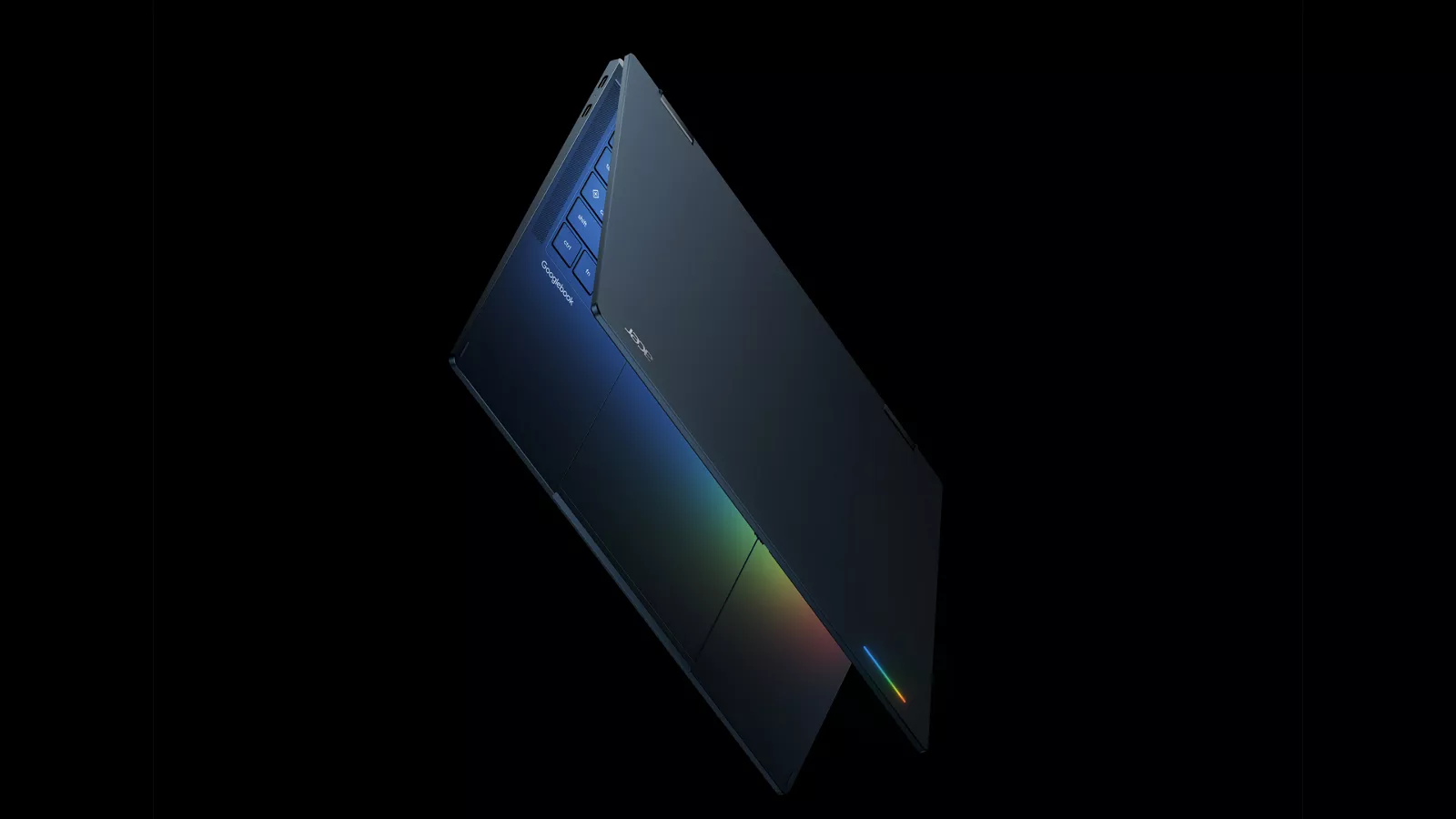
On Qualcomm hardware, ARM-native Android software is already speaking the processor’s language. On Intel hardware, some of that software isn’t.
That can create work: translation, optimization, testing, developer involvement and additional compatibility paths.
None of those things necessarily prevent an application from working. But they do make the Intel path more complicated.
And Google knew that before Googlebook existed.
Sources:Android Developers · Apple Developer · Qualcomm
Google Already Knew
The ARM-versus-x86 Android problem didn’t suddenly appear when the first Googlebook came out of its box. Google has been dealing with it for years.
Google’s Android developer documentation warns that x86 Chromebooks may translate ARM code and states plainly that translation “slows performance and increases battery usage.” For the best performance and lowest battery consumption, Google recommends that developers provide native builds for the processor architecture being used.
So when Googlebook launched and Google acknowledged that some more complicated Android applications and games could require additional developer tuning on Intel machines, nobody inside this industry should have been shocked. Certainly not Google. Certainly not Intel.
Google says the “vast majority” of Android apps run smoothly on both Intel and Qualcomm Googlebooks, but that a “small handful” of complex apps or games need developer tuning to run their best on Intel because many Android apps were originally designed for ARM chips. Google also says it is working with developers, Intel and Qualcomm to continue improving performance and compatibility.
The interesting part isn’t that the problem exists.
The interesting part is that Google knew the problem existed and still made Intel the processor architecture behind three of its five launch machines.
“AMD is conspicuously missing, yet almost nobody involved seems eager to talk about why.”
Qualcomm’s two ARM Googlebooks don’t carry the same fundamental ARM-to-x86 translation issue. That doesn’t automatically make the Qualcomm machines better computers. It does make the choice worth questioning.
Why knowingly make the harder Android architecture path the largest part of the launch lineup?
And that question leads to another one.
Sources:Android Developers · Android Authority
Was Google Still Working Around x86 Until Launch?
Googlebook reached stores with Google still publicly acknowledging Intel-specific Android optimization work.
That is no longer just an architectural thought experiment.
One early Acer Googlebook owner reported that several Android apps they regularly use were marked incompatible, including their banking and credit-card apps and ESPN Fantasy Football. The owner suspected the Intel processor, but that cause is not established: Android developers can restrict devices and form factors independently of CPU architecture. Still, it is a concrete launch-day example of an Intel Googlebook owner finding familiar Android apps unavailable on Google’s new Android-based laptop.
Other Intel owners report a much cleaner experience. One Lenovo Googlebook owner said Play Store apps rendered nicely—including phone-oriented apps—and described the overall interface as smooth with few noticeable glitches. Another Lenovo discussion includes owners reporting both serious lag and app-opening problems and other owners saying their machines were working without those issues. Those conflicting reports are exactly why isolated launch anecdotes should not be turned into a platform-wide verdict.
Nor can every launch problem be pinned on x86. An HP Googlebook owner using the Qualcomm version described touch-first UI compromises and trouble with Microsoft Teams and Outlook-related workflows. That is an ARM machine, which underscores that some early Googlebook problems belong to the new operating system, application support or developer choices rather than processor translation.
So the evidence does not support saying Android apps broadly perform badly on Intel Googlebooks. We do not yet have the controlled Intel-versus-Qualcomm, app-for-app testing necessary to make that claim.
But something important is established.
Google shipped Googlebook while publicly acknowledging that a small class of Android apps and games still required Intel-specific developer tuning, and that optimization work was continuing.
That gives the timing questions real weight.
How long was Google working to get Android performance on x86 where it wanted it?
Not how long Intel needed to finish Panther Lake. That’s a different issue. The silicon existed.
The real question is whether Google’s decision to make x86 a major Googlebook architecture increased the amount of work required to get the platform ready. Google wasn’t simply supporting another processor vendor. It was supporting another processor architecture—and Intel represented three-fifths of the launch lineup.
So when did ARM become production-ready? When did x86? Were the Snapdragon Googlebooks internally ready first? Did ARM-to-x86 translation or application compatibility affect Google’s schedule?
Could Googlebook have reached consumers earlier if its first generation had been ARM-only?
We do not know.
But shipping while Intel-specific optimization was still underway makes those questions harder to dismiss as theoretical.
Somebody inside Google knows when those development milestones were reached. So does somebody at Intel.
Which brings us to a relationship that predates Googlebook by more than a decade.
Sources:Google via Android Authority · Reddit — Acer owner · Reddit — Lenovo owner · Reddit — Lenovo issues · Reddit — HP Snapdragon owner
Intel Was Already Deep Inside Google’s House
Intel isn’t simply a processor company that submitted a chip and won three laptop contracts.
Intel describes its Googlebook work as the continuation of “more than a decade of close collaboration” with Google, including co-engineering around platform enablement, Android optimization, performance tuning and power management. Intel also says its broader ecosystem support helped bring Googlebook to market through Acer, ASUS and Lenovo.
Those happen to be all three of the Intel launch machines.
That institutional history matters.
“Google knew the problem existed and still made Intel the processor architecture behind three of its five launch machines.”
Google engineers know Intel hardware. Intel engineers know Google’s software. OEMs know Intel’s platforms. Validation systems already exist. Firmware knowledge already exists. Support channels and relationships already exist. When something goes wrong, people probably already know who to call.
None of this means Intel did anything improper. In fact, it illustrates why long-term partnerships are valuable.
But it also exposes the question at the center of this story.
When companies choose the technology underneath a new platform, what exactly counts as merit?
Raw performance? Battery life? Compatibility? NPU capability? Graphics? Or does merit also mean that you’ve spent a decade building infrastructure around one another and can get three major OEMs to the starting line?
Because if institutional advantage becomes part of the technical calculation, the best processor on paper does not necessarily become the processor that gets the machine.
And that’s where AMD’s absence becomes much harder to ignore.
Sources:Intel
AMD Wasn’t Outside Knocking on the Door
This might be the strangest part.
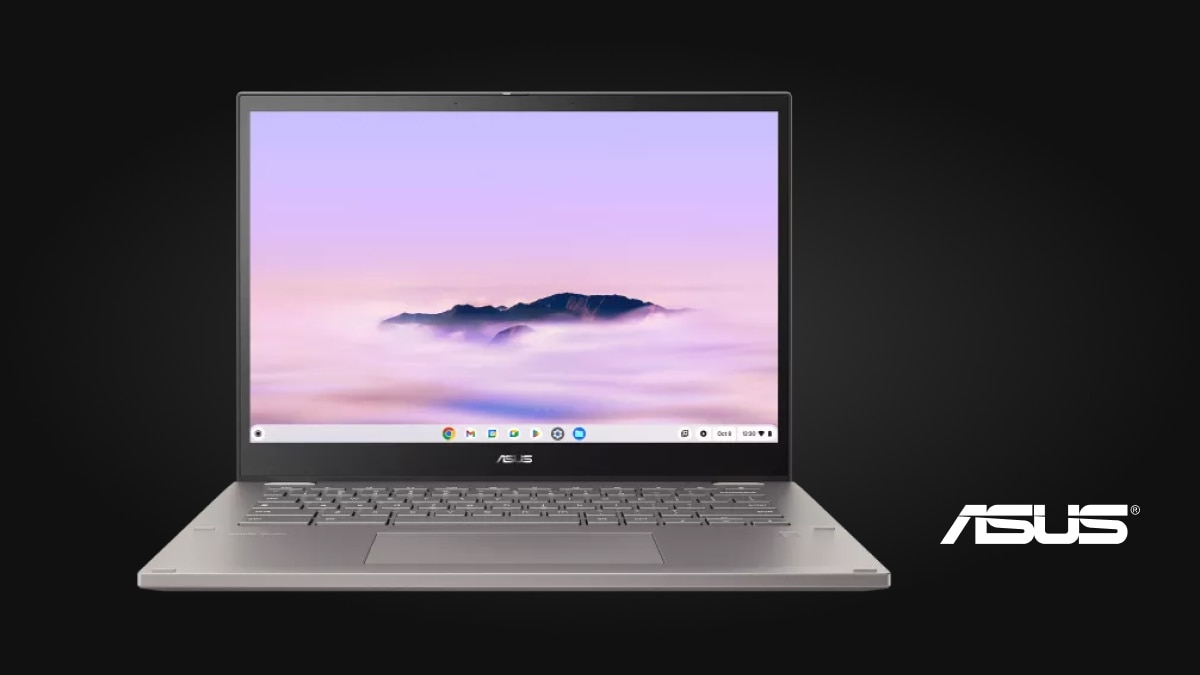
Google already knew AMD. AMD was already inside the Chromebook ecosystem. Ryzen processors have powered Chromebooks. Google has publicly worked with AMD. Acer knew AMD. ASUS knew AMD. HP knew AMD. Lenovo knew AMD.
Those names should sound familiar. They’re the same major PC companies surrounding the Googlebook launch today.
AMD wasn’t an unknown architecture company asking Google to take a chance. Its 2020 Chromebook processors were designed in collaboration with Google, and Google publicly described the two companies as partners.
And today’s AMD isn’t the AMD of twenty years ago. Current Ryzen AI laptop processors combine Zen CPU cores, Radeon graphics and dedicated XDNA NPUs. AMD’s Ryzen AI 400 family reaches up to 60 NPU TOPS, while Google says its launch Googlebooks use NPUs delivering more than 45 TOPS. NPU throughput alone does not establish Googlebook compatibility, but it removes one obvious explanation: AMD does not lack modern laptop-class AI silicon.
If Google wanted another x86 partner, there was an extremely obvious company to call.
Maybe Google called. Maybe AMD wasn’t interested. Maybe AMD prioritized Windows. Maybe Google’s requirements didn’t line up with AMD’s roadmap. Maybe Google wanted one x86 partner at launch. Maybe the Intel relationship simply made adding AMD unnecessary.
There are plenty of possible explanations.
But one explanation that doesn’t hold up particularly well is:
Maybe Google simply didn’t know how to work with AMD.
It did. So did the OEMs.
Which puts us right back where we started.
Why is AMD missing?
Sources:AMD — Chromebook partnership · AMD — Ryzen AI 400 · Google
The MediaTek Standard
And then MediaTek makes the story even stranger.
Google publicly names MediaTek as a Googlebook silicon partner. MediaTek itself went further in May, saying it had partnered with Google to help power “some of the first wave of Googlebooks.”
The five launch machines arrived.
No MediaTek.
That matters because MediaTek keeps this from becoming a simple Intel-versus-AMD argument. MediaTek is another ARM company with extensive Android experience and an existing Chromebook footprint. In its own Googlebook announcement, MediaTek explicitly argued that sharing Android’s architectural roots lets its processors avoid translation layers. That is MediaTek’s marketing claim, not an independent benchmark, but it shows how the company itself views ARM as an advantage for Googlebook.
Yet the first Googlebook lineup contains no MediaTek machine.
Now we have two different absences.
AMD isn’t named as a Googlebook processor partner at all.
MediaTek is named—but doesn’t appear on store shelves. Why?
There is another possibility worth considering because MediaTek already has Kompanio-powered Chromebook hardware in the market.
Google has said that many newer commercial Chromebook models will be capable of upgrading to Googlebook OS, with specific migration paths and device eligibility to be announced later. Google has not yet identified which models qualify, so we cannot say that any particular MediaTek Chromebook will make the transition.

But if existing MediaTek-powered Chromebooks are eventually included, that creates an awkward launch-strategy question.
Why buy the new MediaTek Googlebook if an existing MediaTek Chromebook can run essentially the same new operating system?
That could blur the distinction Google is trying to establish between the new premium Googlebook category and the Chromebook hardware already sitting in stores, offices and customers’ homes. A new MediaTek Googlebook arriving alongside confirmation that existing MediaTek machines can run Googlebook OS could potentially weaken the urgency of buying the new hardware.
We do not know whether that played any role in MediaTek’s absence from the five-device launch.
But it is a question worth asking. And the eventual migration list could make the MediaTek story even more interesting.
Which Intel Chromebooks make it? Which MediaTek models?
And perhaps most interesting for this story:
Which AMD Chromebooks?
If Googlebook OS eventually migrates onto existing Intel and MediaTek Chromebook hardware while AMD machines remain missing, AMD’s absence gets harder to dismiss as coincidence.
If AMD machines are included, a completely different question appears:
If Googlebook OS can run on supported AMD Chromebook hardware, why isn’t AMD part of the new Googlebook lineup?
Either answer could be interesting.
We just don’t have it yet.
Sources:Google · MediaTek · Google — Chromebook migration guidance
Unsupported Does Not Always Mean Incapable
There’s another detail that matters, but only because it sharpens the same question.
Google officially allows developers and advanced users to unlock a Googlebook’s bootloader to install a custom operating system or test software. Unlocking wipes the device and disables some security protections, but the experimentation path is there.
That does not mean Googlebook OS can simply be dropped onto any Ryzen laptop. Hardware enablement still matters.
But it does mean unsupported and technically incapable are not the same thing.
AMD clearly has the engineering capability to evaluate what Ryzen support would require if it wanted to. Whether AMD has actually done that work is unknown.
But once the platform is open enough to examine, “AMD isn’t supported” stops being a complete explanation.
We’re back to the real question:
Why is AMD absent?
Sources:Googlebook Help
Apple Shows the Other Extreme
Apple provides a useful contrast.
Apple Silicon Macs run ARM64, but Apple owns nearly the entire stack: processor, operating system, laptop hardware and boot environment.
Nobody is wondering when AMD will make a MacBook processor. That door simply isn’t open.
Google is building something different.
Googlebook already spans Intel x86 and Qualcomm ARM, with MediaTek publicly identified as another silicon partner and hardware coming from multiple PC manufacturers. Google is trying to achieve some of the integration Apple gets from controlling everything while retaining a multi-vendor ecosystem Apple intentionally does not have.
If Google succeeds, that flexibility could become one of Googlebook’s biggest strengths.
It also makes an unexplained missing processor vendor stand out more.
Especially one named AMD.
Sources:Apple Developer · Google
Merit, Politics—or Just Momentum?
Corporate politics doesn’t have to mean corruption. Usually it looks much more ordinary.
A decade of engineers working together. Roadmaps shared years in advance. Marketing commitments. Reference platforms. OEM relationships. Validation resources. Driver development. Support arrangements. Manufacturing plans. People who already know one another. Hundreds of decisions made long before the public ever sees the finished laptop.
Eventually that infrastructure creates momentum of its own.
Intel may have earned its Googlebook position because it helped build the road Googlebook is traveling on. That would be completely legitimate.
But it still raises the question of whether another processor could have driven that road better.
Maybe Intel was the best choice. Maybe Qualcomm was. Maybe AMD would have been. Maybe Google’s launch required all of these compromises.
The problem is that the public has very little information showing how those choices were actually made.
What we do have is the result.
Three Intel machines. Two Qualcomm machines. MediaTek named but missing. AMD not even on the board. And Google’s acknowledgment that some Intel-specific Android optimization work remained at launch.
That’s enough to start asking questions.
Not enough to answer them.
Sources:Intel · Google · Android Authority
Does Absence Make the Heart Grow Fonder?
There is a strange side effect to leaving AMD out of the conversation.
Nobody can actually buy an AMD Googlebook and compare it against Intel or Qualcomm. There is no Ryzen model to benchmark, no battery-life comparison to argue over, no Android compatibility testing to settle anything.
That leaves AMD in an unusually comfortable position: hypothetical.
Every problem on an Intel machine creates the obvious question of whether AMD would have handled it differently. Every discussion about graphics, efficiency or AI hardware invites another comparison that cannot actually be made. And if AMD-powered Chromebooks eventually appear on Google’s migration list, the question gets even harder to avoid.
None of that proves an AMD Googlebook would be better.
It does something subtler. It makes people wonder.
Googlebook launched without AMD, but AMD’s absence may be creating more curiosity about Ryzen than an ordinary launch model ever would have.
Maybe absence really does make the heart grow fonder.
Sources: Google — Chromebook migration guidance
The People Making These Decisions Probably Already Know
That’s where this story becomes most interesting.
Consumers are only now beginning to compare Intel Googlebooks against Qualcomm Googlebooks. Reviewers are testing performance. Developers and owners are finding compatibility quirks. People are asking whether Android works better on ARM. And we’re asking whether AMD might have been a competitive Googlebook platform.
But Google didn’t begin thinking about these processors last week. Neither did Intel. Neither did Qualcomm. Neither did MediaTek. Neither did AMD. Neither did Acer, ASUS, Dell, HP or Lenovo.
These companies work years ahead. They evaluate processor roadmaps, power envelopes, thermals, graphics, AI acceleration, driver maturity and platform requirements long before customers walk into a store.
“The public is still being asked to wonder whether AMD could compete on Google’s new platform. The companies involved may already know exactly how that competition would turn out.”
And somewhere, quite possibly in more than one laboratory, somebody may already know what Googlebook OS looks like on hardware the public has never been allowed to buy.
Maybe AMD simply wasn’t the right choice. Maybe AMD didn’t want in. Maybe Google didn’t want AMD. Maybe x86 was always Intel’s territory inside this project. Maybe future Googlebooks will suddenly arrive with Ryzen and make the entire mystery disappear.
Any of those answers would be interesting.
The companies involved may already know exactly how that competition would turn out.
AMD is conspicuously missing.
Nobody seems particularly interested in explaining why.
So, shhhh. The absence does not exist.
Sources:Google · Intel · AMD · MediaTek
Editor’s Note
There is one more possibility worth keeping in mind: AMD may simply not need Googlebook badly enough to chase the first generation.
AMD’s client business is already substantial, Ryzen is established across major OEMs, and the company has plenty of opportunity in Windows, enterprise PCs and AI-focused systems. Googlebook, by contrast, is still a new premium category with an unproven market.
So AMD’s absence does not necessarily mean Google shut the door.
It may mean AMD looked at the engineering cost, expected volume and first-generation economics and decided the opportunity was not compelling enough yet.
If so, the question changes from “Why didn’t Google choose AMD?” to something more interesting:
What if Googlebook needs AMD more than AMD needs Googlebook?